
Hi, I'm Peter Brady, a freelance Drupal developer and consultant.
I'm the Drupal developer and consultant for UK membership bodies, charities and research organisations who don't have their own Drupal expertise.
Your site is built on Drupal, and nobody on your team knows Drupal. Perhaps the agency that built it has moved on to other platforms, or the developer who knew it has left. Either way, I pick up where they left off: I keep the site secure, fix what breaks, and build what you've been waiting for.
Some of the organisations I've worked with and helped over the years:
















“We have worked with many developers and can confidently say that Pete is by far the best.”
 Kathryn Maxwell, IT Project Manager, Royal Meteorological Society
If your organisation has a Drupal site
Do you feel like your agency just isn't that into you anymore?
Are you responsible for a Drupal site that nobody is keeping an eye on? The updates stopped a while ago, and you're not sure who you'd call if something went wrong.
Have you stopped asking for changes? Every request takes weeks, comes back with a bigger quote than you expected, or never gets an answer at all.
“Peter joined us on a project which was half built but left in a sorry state by a previous developer. … He helped us launch the project and took ownership till the end, which sets him apart from other freelancers we'd ever worked with.”
 Kenneth Wong, Designer, Crescent Lodge
That's the point I'm usually brought in. I start by finding out what state the site is in. Then I bring the updates up to date, get your change requests moving again, and stay on as the person you call. You can keep me on a monthly plan or call on me by the day.
“He explains things to us in a way that makes sense in English, not developer-speak. We feel like Pete is an extended part of our team.”
 Katie Angotti, Programme Lead, Danone
If you want to see what that looks like, every Thursday I publish the week's Drupal security updates, in plain English: what each one means, whether it applies to your site, and the one line to send to whoever looks after it. I started writing them for my own clients.
If you're an agency
Do you have clients on Drupal, and nobody on your team who still works with it?
You built the site years ago and the client is still on it. Now they've raised a ticket, and the last person who knew Drupal has left. You don't want to turn the work away, and you don't want to lose the account.
“Pete's vast experience and knowledge along with being a great communicator made him a great mentor for the development team. The whole development team benefited from Pete's guidance and calmness under pressure.”
 Matt Wagg, Developer, Comic Relief
You may also be wary of bringing in a freelancer who could walk off with your client. I work inside your repository and your process, and your client stays your client.
“We engaged Peter to assist with a brand website for a major blue-chip client of ours. … Thanks to Pete's excellent work ethic and great communications the project was delivered in 6 weeks and delivered a secure and rock-solid implementation.”
 Jeremy Graham-Cumming, Operations Manager, DML Marketing
Once the site is looked after
Then you get more than just security updates.
A site that has gone without a developer for a while usually carries a list of things you'd love to do, if only someone could. Connect it to the CRM. Let members renew online and have their record update itself. Stop typing the same figures into two systems. I've built that kind of integration for Drupal sites with Microsoft Dynamics, Xero, Mailchimp, Moodle, Shopify and Zapier, among others.
“He is a joy to work with as he is flexible, efficient and a great communicator. We now have a system which is far more intuitive for our visitors and 7,000+ members.”

 Joe Yates & Steph Ray, The London School of Hygiene & Tropical Medicine
I also build private AI systems for the same kinds of organisation: an assistant that answers a question in plain English from your CRM, your finance system and your website, with a citation on every answer. That work has its own pages, starting with private AI.
“We were looking for someone who could deliver quickly, following the specs whilst adding experience and database-specific knowledge to the table. Luckily we found the exact match.”
 Luca Russo, Web & Social Collaboration Functional Lead, Givaudan
Free to use
Some tools you might find useful.
These are free tools. There is no sign up, and you can use them whether or not we ever work together.
Drupal Compatibility Lookup
Does it run on your Drupal? Every module, theme and PHP version against every Drupal from 8.9 to 12, read from drupal.org and rebuilt every week, with known security holes marked.
Look something up →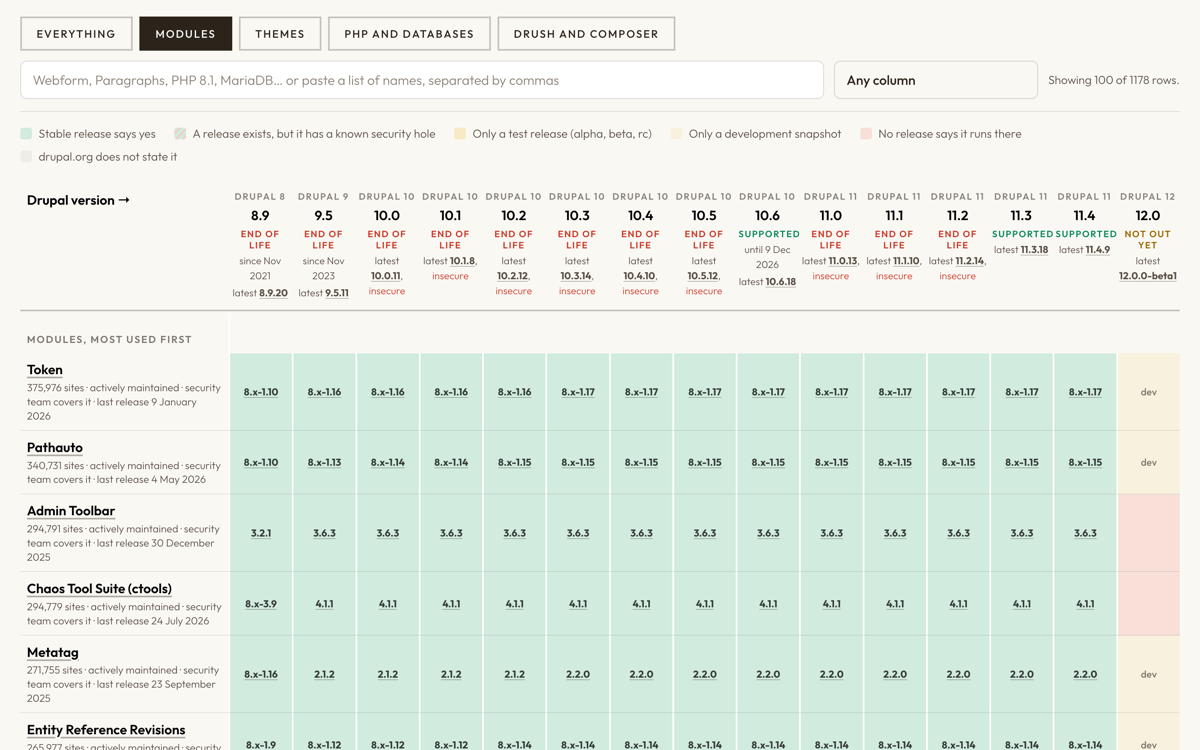
Drupal security updates, in plain English
Every Thursday: what each update means, whether it applies to your site, and the one line to send to whoever looks after it. I started writing them for my own clients.
Read this week's →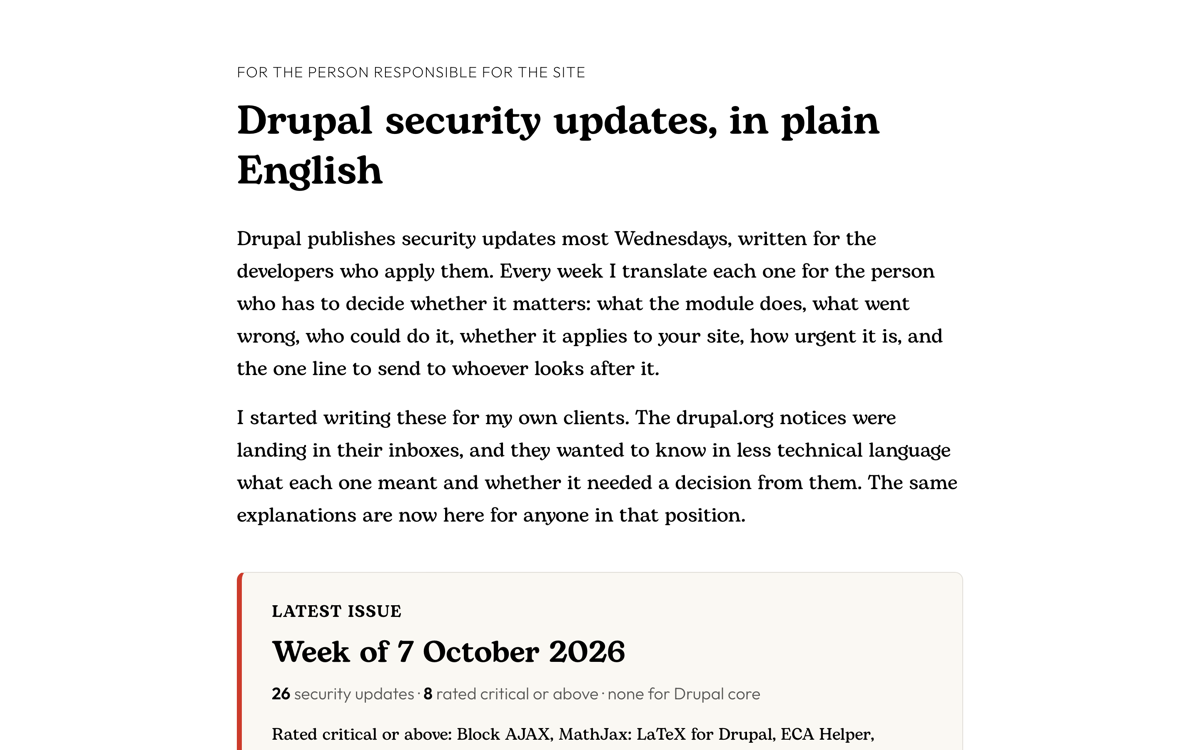
Funder Map
Who funds charities like yours? Type a charity's name and see its funders, the charities most like it, and the funders worth a look, built from a million published grants and the register.
Map a charity →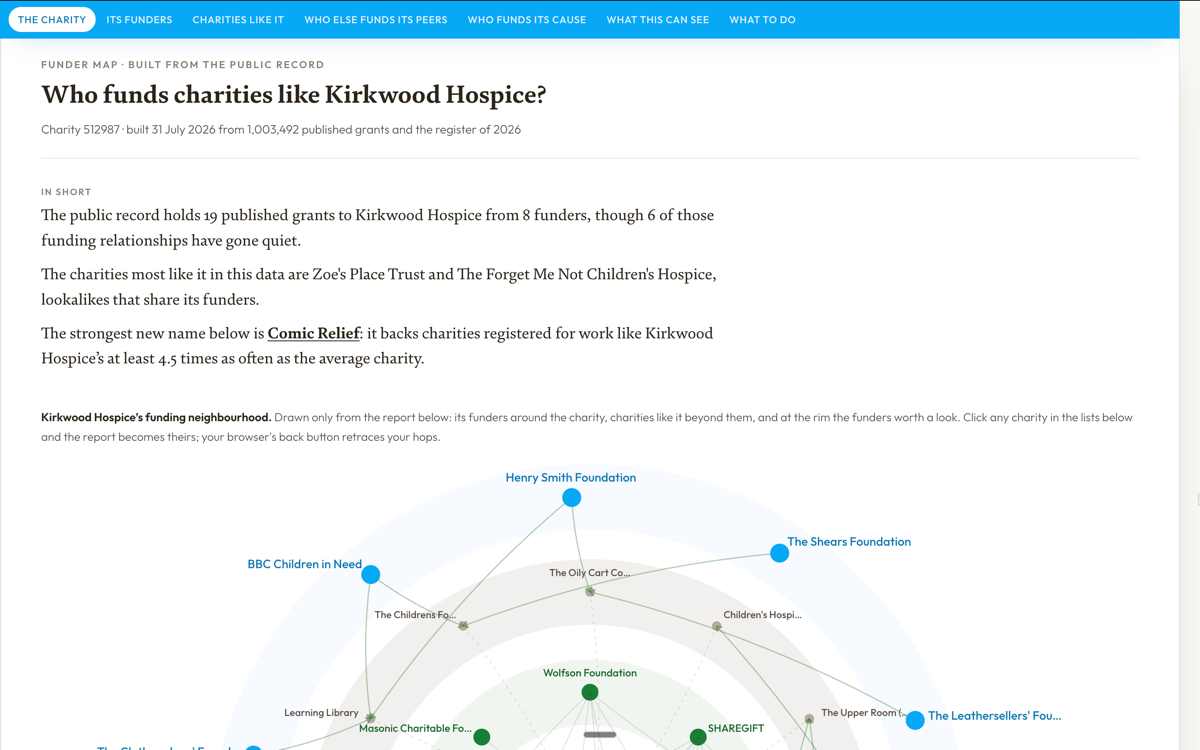
Where to start
Send me your Drupal site's address.
I'll take a look and come back to you with what state it's in, what the Drupal 10 end of life on 9 December means for it, whether any of this week's security updates apply to it, and what it would cost to have me look after it. There's no charge for that and no obligation, and you'll know more about your site than you did before you wrote. peter@peterbrady.co.uk
“From our first call, Peter was very friendly and really took time to understand the key requirements of this project. … The development phase itself and the aftercare have been fantastic.”
 Stephen Daniels, Owner, We Are North West